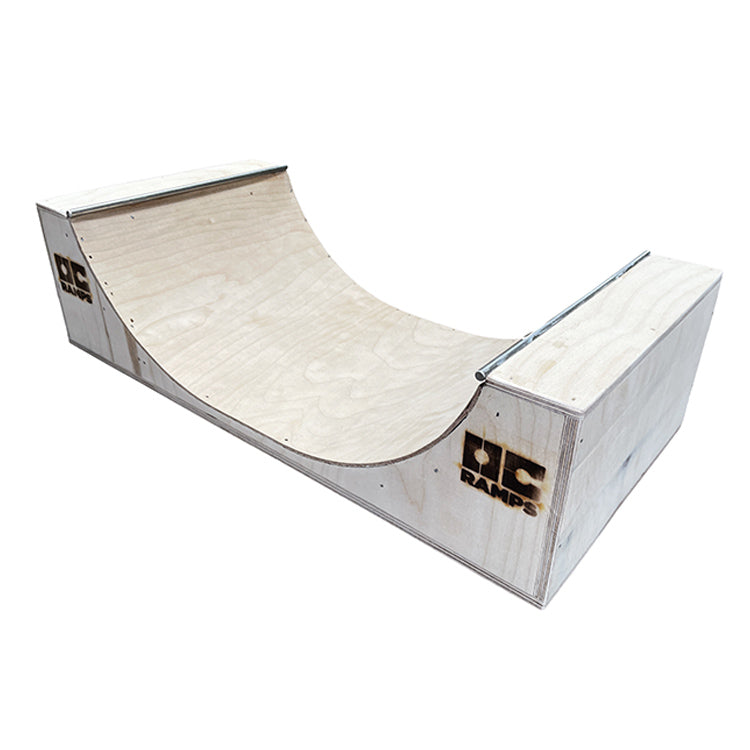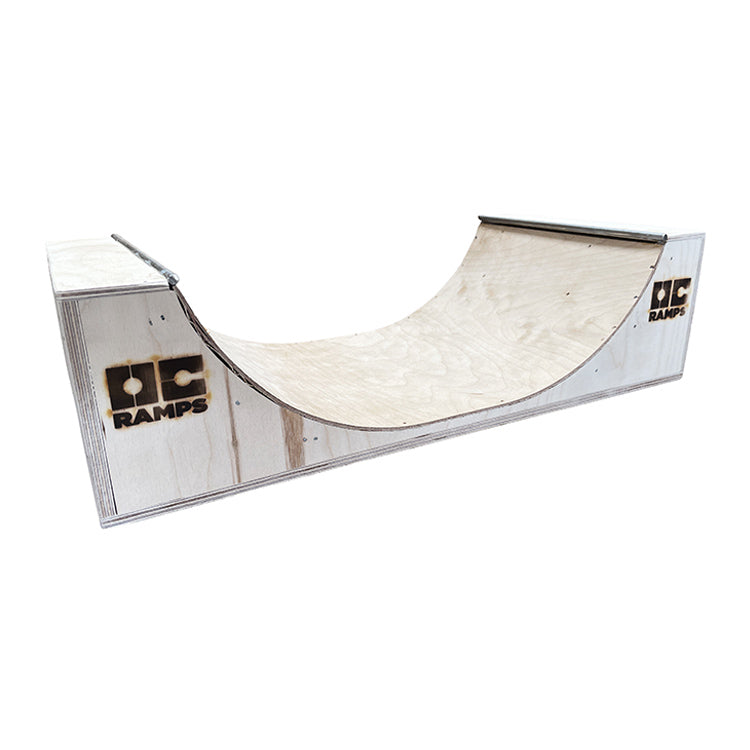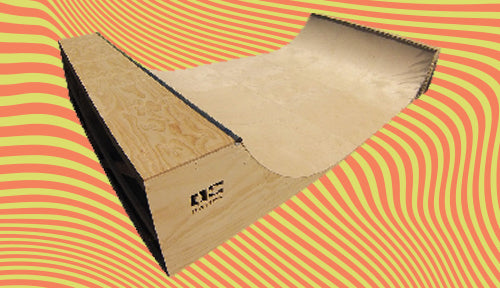

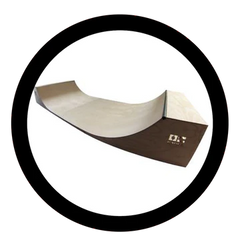
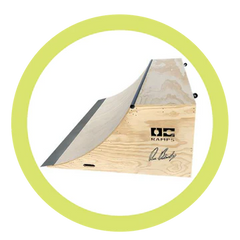
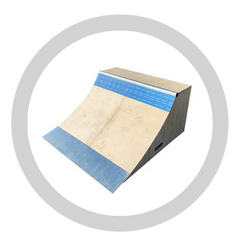
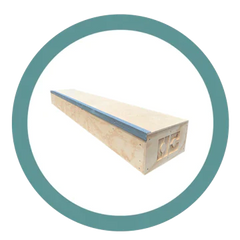

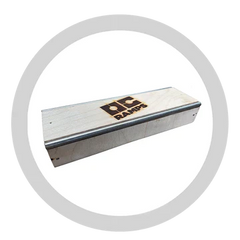


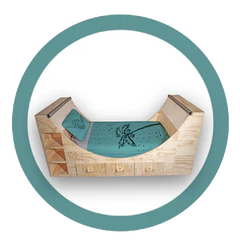
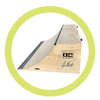
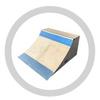
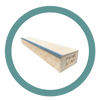



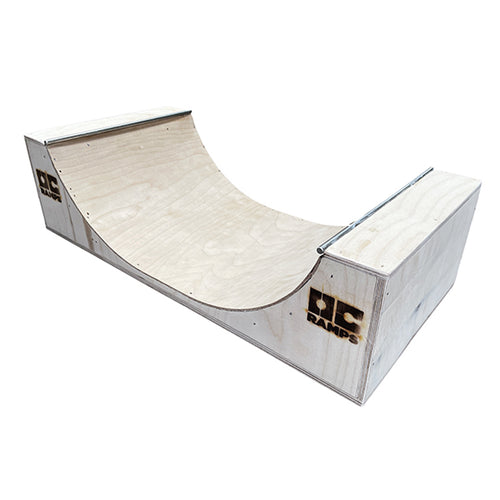
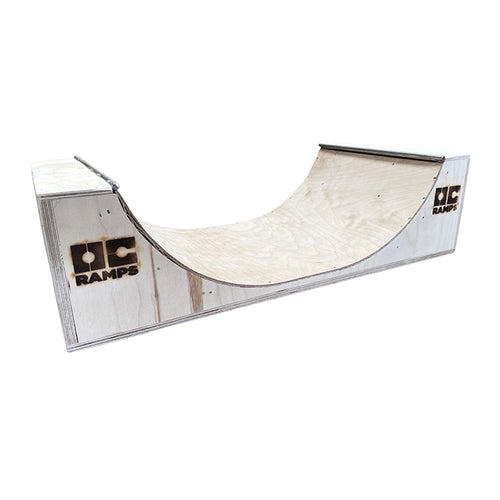
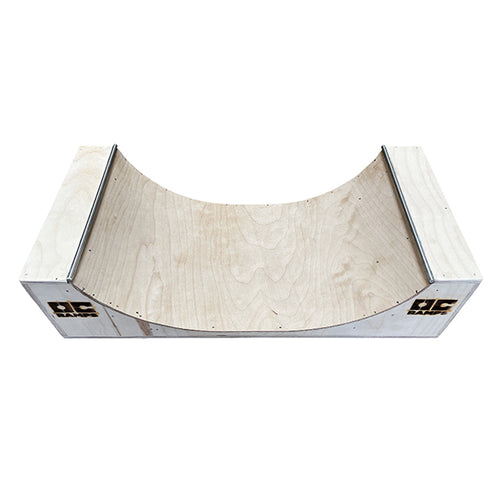
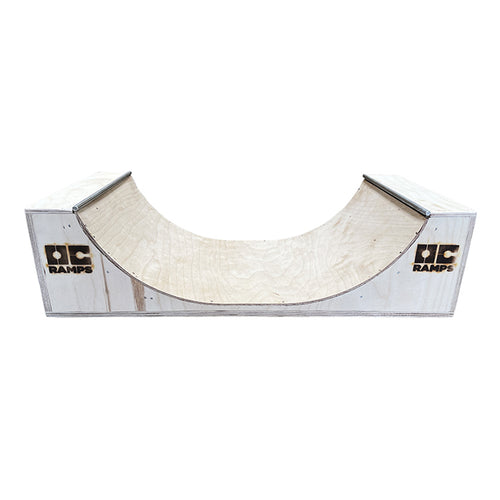
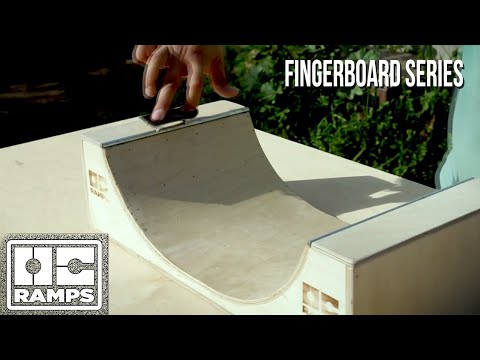


Fingerboard Half Pipe brings two transitions and a flat section together in an exterior-grade lumber obstacle with galvanized-metal coping, a lightweight build, and no assembly required.
Continuous two-sided transition
The Fingerboard Half Pipe joins two transitions in one obstacle, creating a repeatable back-and-forth path. A rider does not need to turn the course around after each approach. Choose this connected layout when continuous transition practice matters more than the spacing flexibility of two separate Quarter Pipes.
A flat center links both walls
A flat section sits between the two transition faces. It gives the fingerboard a defined crossing before the next wall instead of treating each face as an unrelated launch point. That middle connection is useful for someone who wants one complete obstacle with a predictable rhythm through every pass.
Exterior lumber with metal coping
Exterior-grade lumber forms the obstacle and galvanized metal provides the coping. The two materials give the miniature Half Pipe a wood-and-metal build language tied to full-size ramp construction. Material should support the transition choice, not substitute for deciding whether the connected two-wall form belongs in the course.
Lightweight enough to move
The complete Fingerboard Half Pipe is lightweight and transportable between suitable session spots. That helps when a desk or table must be cleared after use or the course changes rooms. Portability does not alter its geometry, so leave enough stable space on both sides for the intended back-and-forth path.
What are the dimensions and weight of Fingerboard Half Pipe?
Fingerboard Half Pipe measures 21 inches long, 10 inches wide, and 6 inches high, and weighs 3 pounds. Compare the 21-by-10-inch base with the intended surface and storage location before ordering. The exact dimensions and weight answer physical-fit planning without relying on scale impressions from product photos.
When is one Quarter Pipe the better starting point?
Choose one Quarter Pipe when tabletop space is limited, a single transition is enough, or the rider wants to expand gradually. Choose the connected Half Pipe when both walls and the flat crossing will be used from the beginning. The smaller purchase should solve the current session, not merely preserve theoretical upgrade room.
What should the next obstacle add after a Half Pipe?
Add a ledge, manual pad, or launch feature only when the rider wants a movement the connected transitions cannot provide. Another transition may duplicate the existing course job without improving a tight setup. Course expansion should broaden practice rather than simply surround the Half Pipe with more versions of the same wall.
Specifications
Weight: 3 lbs
Height: 6 inches
Width: 10 inches
Length: 21 inches
Shipping Cost: FREE!
What to Expect
We have two teams working around the clock to mass produce the beloved kits that are in high demand, after all we service ALL skaters worldwide! The fabrication time in our warehouse starts when you place the order as the information prints out directly to our team to start production. After the kit is created, the next process is actual transit time. We work with several carriers for a variety of our products to help cut down on transit times and delays.
Our Quarter Pipe kits (4ft wide Quarter Pipe & larger), Half Pipes, and sheets of GatorSkins or Skatelite Pro all ship on a double size pallet (4ft wide x 8ft long) via freight carrier. As the double sized pallet leaves our warehouse, the freight carrier will then begin the transit process to get your order over to your local delivery terminal. As your shipment arrives in your local area, the freight carrier will have an appointment setter call you directly to schedule an appointment for delivery. Just like when you book an appointment with the cable company, you will be given a 4 – 8-hour window of delivery.
The freight driver will then arrive at your residential delivery address on the day of your scheduled appointment. Please note that this will be a curbside delivery. The driver will not be able to pull into your driveway or any other requested area on your property. You will want to be sure to have 2 – 3 able-bodied adults, in total, at your place of residence during the delivery window to assist with the unloading of this pallet. Provided the size and weight of these shipments, a liftgate is not permitted and drivers are unable to assist with any of the hand unloading process. The pallet is easy to breakdown to execute a hand unloading process with yourself and a few additional helping hands.
The entire unloading process may seem daunting however it is a fairly simple process that can be executed within 10 – 20 minutes! Please keep in mind that delays may occur with the delivery. We understand that this can be frustrating. If you experience a missed appointment, please reach out to us and our team is happy to help.
If you notice any damages or issues with the order upon receiving, please proceed with accepting the shipment, but notate on the delivery receipt by stating “DAMAGE” when signing the delivery receipt. You do not need to itemize any material which was damaged when accepting the shipment. Once your shipment has been unloaded and signed, please email our team directly with the damage(s), proof of signed delivery receipt which has been notated as damaged along with full length pictures of the material which was damaged. We will work on resolving the issue immediately.
The internet has all sorts of terrible ideas as to how to quiet or dampen the sound of your skateboard ramp - in particular the mini ramps (or halfpipes).
You may read about wives tales on using insulation, filling the coping with whatever, or add pillows and blankets behind the ramp. We are here to clear the air….that is all nonsense.
There are really only 2 suggestions to help quiet your mini ramp.
- You can close up the back of your skateboard ramp with ¾” thick plywood. This will eliminate the hollow sound significantly. Again, don’t read into the bogus information about filling in that empty space before you close it up with plywood. It doesn’t work. Simply closing up the backend will help with the noise. Some customers will get creative with it- we’ve seen several put hinges on the backend - making a custom door for storage, etc. That is entirely optional to make use of the space. But in terms of noise levels, close it up.
- Also using a softer gel wheel is helpful to give you the incognito vibe your neighbors won’t complain about while shredding your skateboard ramp. Generally the harder the wheel, the louder they hear ya coming! Many skaters have multiple skateboards with a different set of wheels, most prefer the harder wheels during normal street skating use & then at night we switch over to the gel softer wheels so your neighbor’s can get their precious sleep & you can shred your heart out! Not every skater likes riding a gel wheel. There are many pros/cons. For this conversation, the biggest pro for having a softer wheel is the reduced noise factor. If you have neighbors that are goin to be a narc, just throw on the soft wheels!