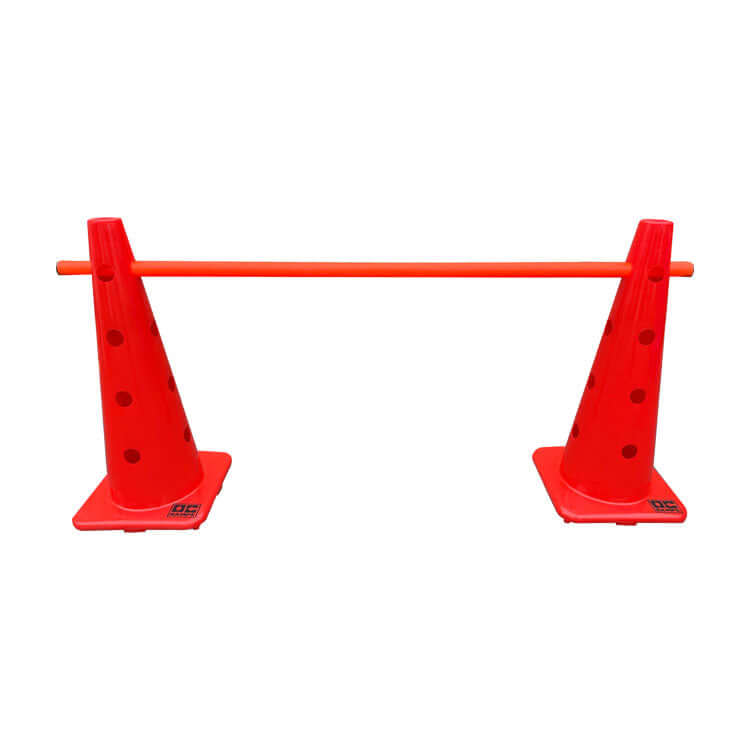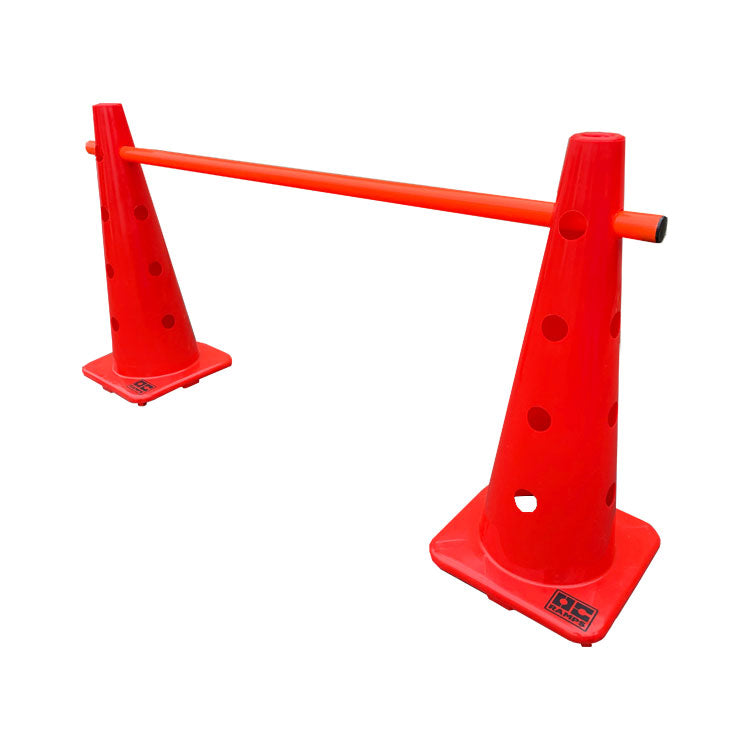



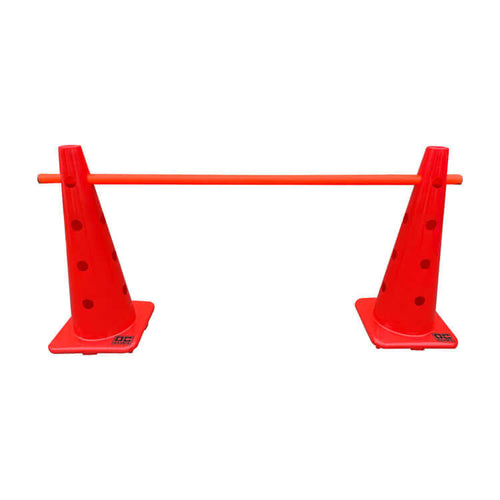
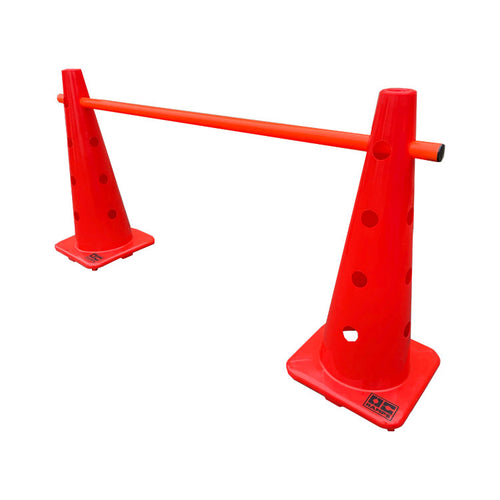
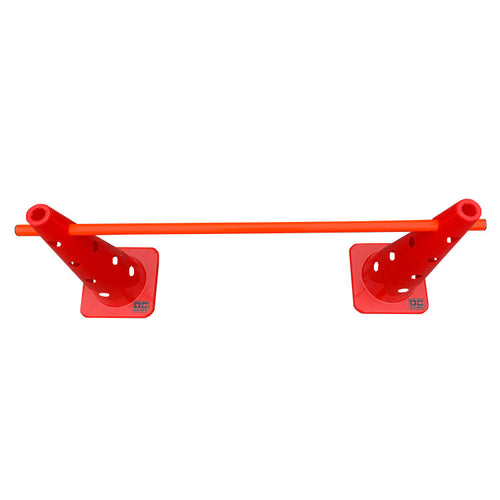
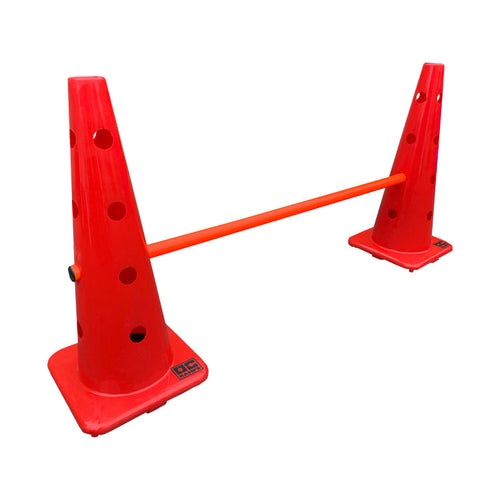
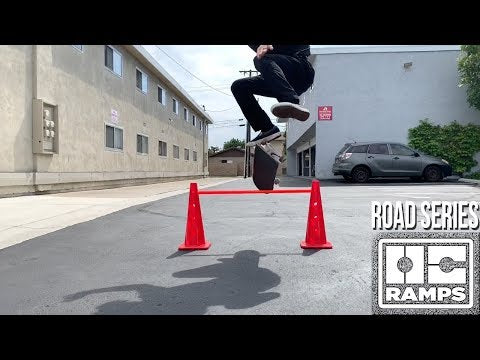
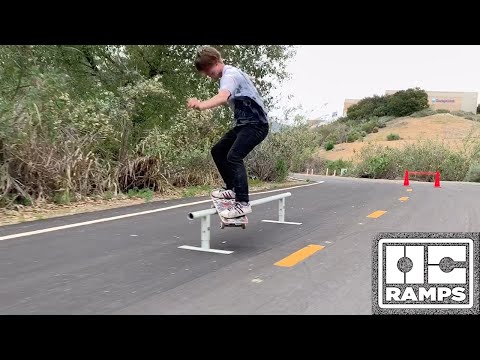


A portable cone-and-bar target with four height settings
Skate Cones include two cones and one 38-inch ollie bar in a seven-pound practice set. The bar can be set at 5, 9, 13, or 17 inches, making the product a compact choice for riders who want a visible adjustable target rather than a fixed ramp, rail, or ledge.
What's in the Box
- Two skate cones
- One 38-inch ollie bar with 5-, 9-, 13-, and 17-inch height settings
Specifications
- Weight: 7 lbs
- Includes: 2 cones and 1 38-inch ollie bar
- Bar heights: 5, 9, 13, and 17 inches
Shipping & Placement
Free shipping in the U.S.
Shipping is free to the 48 contiguous states with no order minimum. Alaska and Hawaii require a shipping quote.
Set one of four bar heights
Place the 38-inch ollie bar at 5, 9, 13, or 17 inches, then make sure both cones sit securely. The seven-pound set is easy to move when the practice target changes.
Questions about Skate Cones
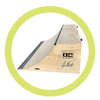
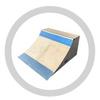
How do Skate Cones compare with a compact Wedge Bump?
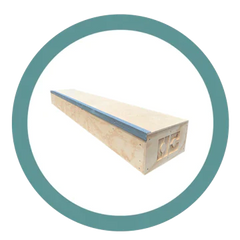
Skate Cones create an adjustable horizontal target using a 38-inch bar and four height settings. A Wedge Bump is a structural takeoff that launches the rider from a plywood ramp face. Choose the cones for a movable practice goal; choose the wedge when the setup needs an actual launch surface.
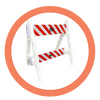
How do Skate Cones compare with the Caution Skateboarding Sign?
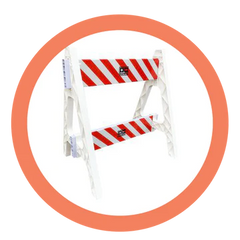
Skate Cones use a bar between two cones to create a horizontal target that changes height. The Caution sign is one fixed two-foot plastic roadwork object. Choose the cones when adjustable bar practice is the goal; choose the sign when a compact vertical target and visual obstacle fit the session better.
When is Starter Package 1 a better starting point than Skate Cones?
Skate Cones are one seven-pound adjustable target for a rider who already has the rest of the session covered. Starter Package 1 adds a complete skateboard, two Wedge Bumps, and a Roll-On Rail. Choose the package when the buyer needs a broader first setup, not only a movable bar target.
Who should choose Skate Cones instead of a fixed rail?
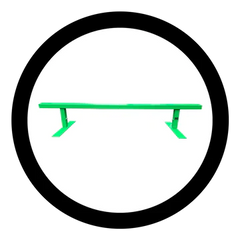
They suit a rider who wants a seven-pound target that changes height and location quickly. A fixed rail provides a continuous working surface and more structural presence. Choose cones for adjustable practice goals, not as a substitute for every rail or ledge job.
Explore See more Road Series obstacles.
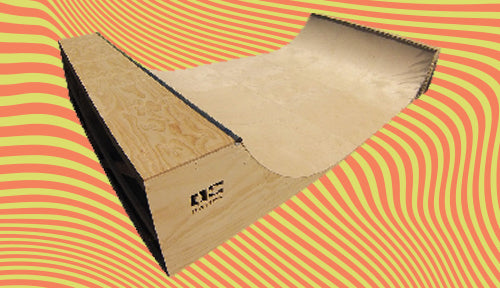
The internet has all sorts of terrible ideas as to how to quiet or dampen the sound of your skateboard ramp - in particular the mini ramps (or halfpipes).
You may read about wives tales on using insulation, filling the coping with whatever, or add pillows and blankets behind the ramp. We are here to clear the air….that is all nonsense.
There are really only 2 suggestions to help quiet your mini ramp.
- You can close up the back of your skateboard ramp with ¾” thick plywood. This will eliminate the hollow sound significantly. Again, don’t read into the bogus information about filling in that empty space before you close it up with plywood. It doesn’t work. Simply closing up the backend will help with the noise. Some customers will get creative with it- we’ve seen several put hinges on the backend - making a custom door for storage, etc. That is entirely optional to make use of the space. But in terms of noise levels, close it up.
- Also using a softer gel wheel is helpful to give you the incognito vibe your neighbors won’t complain about while shredding your skateboard ramp. Generally the harder the wheel, the louder they hear ya coming! Many skaters have multiple skateboards with a different set of wheels, most prefer the harder wheels during normal street skating use & then at night we switch over to the gel softer wheels so your neighbor’s can get their precious sleep & you can shred your heart out! Not every skater likes riding a gel wheel. There are many pros/cons. For this conversation, the biggest pro for having a softer wheel is the reduced noise factor. If you have neighbors that are goin to be a narc, just throw on the soft wheels!